Canals and aqueducts · Scotland
Glen Loy AqueductAqueduct by Thomas Telford (1806), Lochaber, Scotland
- Type
- Aqueduct
- Built
- 1806
- Where
- LochaberScotland
- Today
- Standing
- Telford's part
- Engineer
- Location
- 56.8903, -5.0398
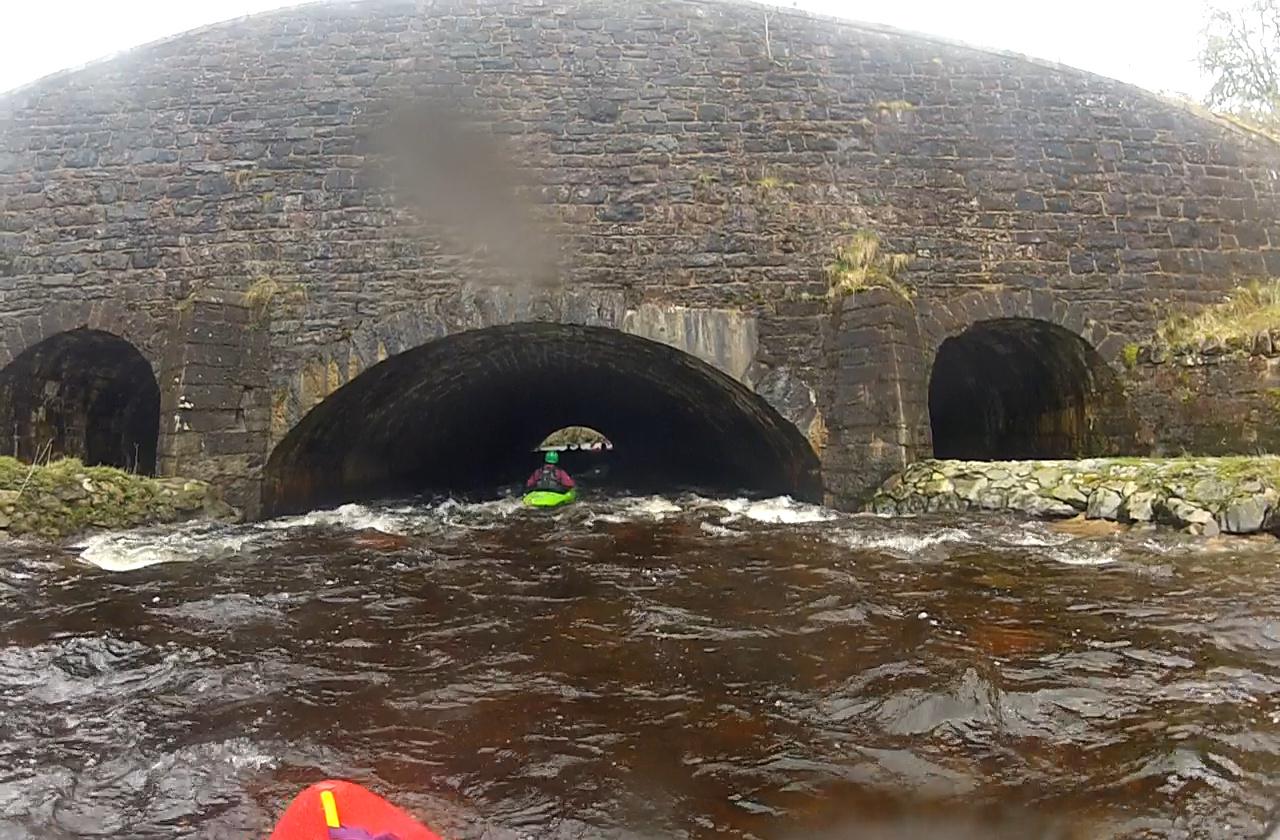
Glen Loy Aqueduct carries the Caledonian Canal over the River Loy near Banavie. It has three parallel tunnels, each about 260 ft long, and the river runs through the middle one. It is Category A listed.
What you are looking at
Three parallel masonry tunnels run beneath the canal. The centre one has a segmental arch and carries the River Loy. The outer two have round-headed arches. Accounts differ on what they carry: the Wrenn listing summary mentions roadways paved with stone cobbles that give access to fields, while a source quoted by Canmore says two waterways and one narrow roadway. Canmore says it is the largest of six aqueducts on the western section of the canal.
The Historic Environment Scotland listing is LB7085, and the aqueduct lies within a scheduled monument covering the canal's Banavie to Loch Lochy aqueducts.
Who built it
The listing gives Telford as designer and dates it to about 1815. The Institution of Civil Engineers entry quoted by Canmore says it was built between March and October 1806 by the contractors Simpson & Wilson, so the sources differ on the date.
It is part of the Caledonian Canal and sits close to Neptune's Staircase.
Visiting
- Find it. Near Muirshearlich, between Banavie and Gairlochy, just below the Loy road bridge.
- See the cobbled roadways. The listing says the roadways give access to farmland between the canal and the River Lochy.
Check locally before you travel, as access and use can change.
Questions people ask
When was Glen Loy Aqueduct built?
In 1806 according to the Institution of Civil Engineers account, or about 1815 according to the listing.
How long are its tunnels?
About 260 ft each.
What protection does it have?
Category A listing (LB7085).
On the map
Open on the full map · Directions